Introduction
To grow a business, you need to ensure you’re providing a great product/service, but also connecting with your ideal audience, showcasing your worth, gaining trust, gaining new leads and converting those leads to sales. By having a strong online presence, within a highly competitive market, you can easily connect with people looking for your products/services.
Digital marketing services for business growth can help improve your online presence. Having a digital marketing strategy in place will help you create an online presence, showcase your products/services and connect with potential customers while maintaining consistency.
Many businesses can struggle to put their online marketing together. You may have a website but very little leads coming through. You may be posting often on socials but not reaching your ideal audience. You might be using paid ads but are unsure why you aren’t getting the results you want. Or you may just have great products/services but not an effective online marketing strategy.
Sometimes it’s not that you’re not marketing at all, but your individual efforts are not working together.
Having a professional website, consistent social media, well planned paid advertising, lead generation and a realistic business growth strategy can all work together to give you a better online presence.
We provide technology driven services to help your business. This includes building websites, UI/UX design, bespoke software development, app development, cloud services and software consultancy. We also focus on business concepts, website design, social media management, paid advertising, lead generation and helping you to identify growth opportunities through our Digital Marketing Services branch of PRT: Digital Marketing Services.
This guide will explain how we can help you with these services, why it matters and how to have a more strategic approach to your digital growth.
What Is Digital Marketing and Why Does It Matter for Business Growth?
Digital marketing services for business growth is an important method of marketing your business, product or service using various online platforms such as websites, search engines, social media, paid advertisements and emails.
This means businesses can target their desired audience more effectively by using different methods to market their business and track certain aspects of their marketing campaigns.
For example, if you are providing a local service you could use your website to provide information about your services, social media to showcase your expertise, and paid advertisements to target those that may be interested in your services.
If you are a retailer you could create online marketing campaigns to promote your products and encourage people to get in contact with you.
If you are starting up a new business you could use digital marketing to promote your new offering, see how much interest you get from your audience and what kind of messaging stands out to them.
Digital marketing is useful because it connects several important business activities:
Visibility: Helping potential customers discover your business.
Credibility: Presenting your products, services, experience, and business information professionally.
Engagement: Communicating with people through content, comments, messages, and enquiries.
Lead generation: Encouraging interested prospects to contact your business.
Measurement: Reviewing campaign performance to identify opportunities for improvement.
Digital marketing services is not a guarantee of immediate sales. Results depend on the target market, offer, competition, budget, campaign quality, website experience, and how effectively enquiries are handled.
The objective is to create a structured approach that helps your business reach relevant people and improve its chances of converting interest into opportunities.
Why Many Businesses Struggle to Grow Online
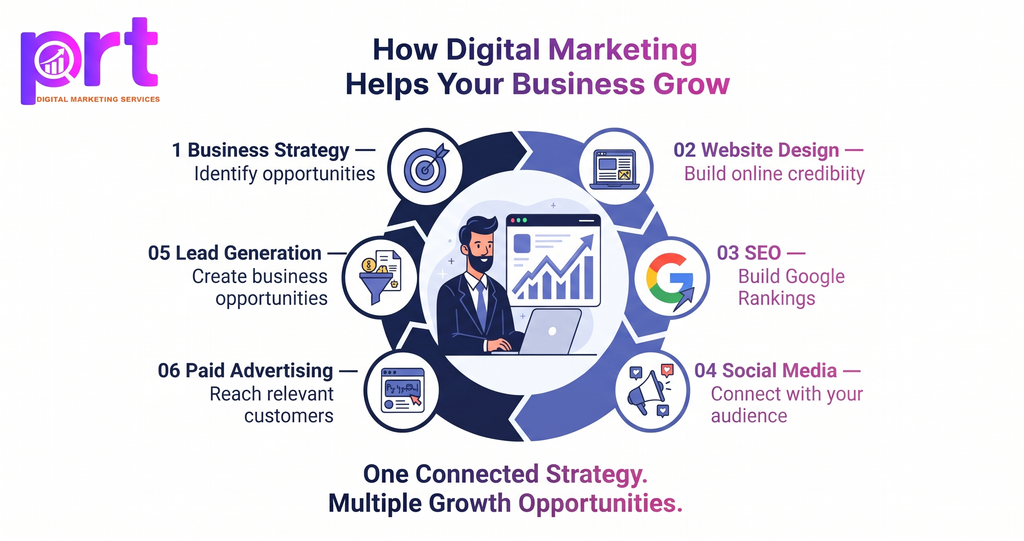
Before investing in digital marketing services for business growth, it is helpful to understand the challenges that prevent many businesses from getting the most out of their online presence.
An unclear business strategy
Some start advertising without knowing who their target market is, what their ‘value proposition’ is or even what their main goal is.
With no clear strategy you will end up with very vague messaging. This will leave your campaign not resonating with the right people who are most likely to purchase.
Firstly you need to know what you have to offer, who you are offering it to, what problems you solve and why customers should choose you.
An outdated or ineffective website
A website is often one of the first places potential customers visit when evaluating a business.
If it’s difficult to use or slow to load, confusing or lacks key information then people might not stay long enough to contact you.
A professional website will help people to understand what you are offering and allow them to easily know what to do next.
Inconsistent social media activity
Setting up a social media page is just the first step. You will also need to provide relevant content, keep it regular, have clear communication and keep on top of interactions with customers.
Without a content strategy in place your business page can become seen as unresponsive or inconsistent.
Paid advertisements without proper planning
Paid advertising can be very beneficial by helping your business get seen by new audiences. But if you aren’t clear on what your campaign goal is, it can be difficult to measure your success.
Targeting your audience, having good creative, good landing pages, measuring conversions, budgeting and having a good process in place for follow up.
Poor enquiry management
Getting Enquiries Does Not Automatically Mean Getting Sales
If your response time is slow, your information isn’t clear or you don’t follow up then potential customers may go elsewhere.
Ensure your marketing and sales are working together to ensure interested prospects are contacted in a timely manner with relevant information.
No clear measurement process
Businesses sometimes focus only on likes, followers, impressions, or website visits. Although these metrics can provide useful context, they do not always demonstrate business impact.
Depending on the campaign, more meaningful measurements may include qualified enquiries, cost per lead, booked appointments, conversion rate, customer acquisition cost, and revenue attributed to marketing.
Identifying these challenges helps businesses make better decisions about where to invest their time and budget.
Business Ideas and Growth Strategy: Start With the Right Direction
An effective digital marketing strategy is based on knowing your business.
You need a good idea of your market, customers, product/service and growth goals before developing a website or advertising.
This is especially important for new businesses, start-ups, local service providers and small businesses who will need to be careful with their budgets.
Identify your target customers
The first step is to understand who is most likely to purchase your offering.
Consider questions such as:
- What type of customers need your product or service?
- Where are these customers located?
- What challenges are they trying to solve?
- What information do they need before making a decision?
- Which online platforms do they use?
- What factors influence their purchasing decisions?
If you provide commercial interior design services then your target market will be office owners, commercial property managers and growing businesses. This marketing strategy differs from a business that sells their products directly to consumers.
Having a clear target market means you can create relevant content for your website, social media and advertising.
Define your business value proposition
By doing some research on your competitors you’ll be able to see what they’re saying about their services, how their website looks, what they’re saying on social media and how they’re attracting customers.
You won’t want to copy what they’re doing but you will get an idea of where there are opportunities.
You may find they don’t explain much about their service, their site is confusing, or they don’t often post educational content. This can help you stand out with your message.
Research competitors and market opportunities
By researching your competitors you will gain insight into how they market their services, what their website looks like and how they interact with customers on social media.
This isn’t about copying what they are doing, but about identifying areas to improve on.
You may notice that competitors aren’t providing a lot of information about their services, have confusing websites or rarely post any educational content. This can help you to create a unique message for your business.
Set measurable business objectives
A business should establish a primary objective before selecting marketing channels.
Possible objectives include:
- Increasing qualified enquiries.
- Improving local business visibility.
- Promoting a new service.
- Generating product enquiries.
- Increasing appointment bookings.
- Attracting website visitors with relevant purchase intent.
- Improving conversion rates on an existing website.
PRT Digital Marketing Services can help businesses approach their online presence with a growth-oriented mindset, connecting business planning with practical digital activities.
Website Designing: Build a Strong Foundation for Your Business
Your professional website A key element of your online presence is having a professional website. This will help provide potential customers with a central place to find out more about your business and what you offer.
Whilst social media and advertising can help people become aware of your business, having a structured website allows you greater control over the information provided.
Make a strong first impression
Your website should reflect your brand identity and communicate your business purpose clearly.
A professional design typically includes consistent colours, readable typography, relevant images, clear service descriptions, and intuitive navigation.
Visitors should be able to understand what your business does without having to search through multiple pages.
Ensure mobile responsiveness
Many people browse websites on smartphones. Your website should therefore work effectively across mobile phones, tablets, and desktop screens.
Important considerations include readable text, appropriately sized buttons, responsive layouts, compressed images, and simple contact options.
Create clear service pages
Each important service should have its own clearly structured explanation when appropriate.
A service page can include:
- The problem the service addresses.
- Who the service is suitable for.
- What is included.
- The process involved.
- Relevant examples or portfolio items.
- Frequently asked questions.
- A clear enquiry or consultation CTA.
Detailed service pages help visitors understand your offering and can support search engine visibility for relevant searches.
Make contacting your business easy
A website should not leave visitors wondering what to do next.
Depending on your business model, useful actions may include calling your team, sending a WhatsApp message, completing an enquiry form, requesting a quotation, or booking a consultation.
Contact options should be easy to find without overwhelming the page.
Design for usability and conversion
Web design is not just about how it looks but also about ensuring your users have a clear path through the site.
This means that when a potential customer visits your website they should understand their problem and be able to look at the solution and contact your business.
PRT Software Solutions offer website development and UI/UX design which can help your business create a professional digital presence. If you want your business to have a cohesive strategy, you can consider web designing alongside our marketing strategy service PRT Digital Marketing Services.
Explore PRT Software Solutions: https://prtsoftwaresolutions.com/
Social Media Maintenance: Build a Consistent Brand Presence
Social media gives businesses opportunities to share information, demonstrate expertise, communicate with customers, and maintain visibility between purchases.
However, it takes more than just sharing occasional promotional posts.
A strategy must be created to ensure that the content, branding, engagement and reviewing of the social media is consistent.
Select suitable platforms
Not every business will need to be active on every social media platform.
Your business should be present on the platforms that your audience would use, that align with your products or services, the type of content you want to share and your marketing goals.
Social media platforms such as Instagram and Facebook can be useful for visually showcasing your products, local services, events and customer facing offers, whilst LinkedIn could be the right choice for professional services and B2B communications.
Ultimately it will depend on where your target customers are hanging out and how they like to find out about businesses.
Create a content strategy
A content calendar helps businesses plan their posts instead of publishing without direction.
Useful content categories include:
Educational content: Answer common questions, explain industry concepts, and provide practical advice.
Problem-solving content: Describe challenges customers face and explain potential solutions.
Brand content: Introduce the business, explain its values, and present its capabilities.
Service content: Explain the services available and the situations in which they may be useful.
Engagement content: Invite relevant questions, opinions, and discussions.
Promotional content: Share suitable offers, announcements, service updates, and consultation opportunities.
The balance should depend on the business’s objectives and audience. An account that publishes only advertisements may struggle to provide ongoing value to followers.
Maintain a consistent posting schedule
Consistency can ensure your business stays active on social media. How often you post should be based on the resources you have, how good the content is and how your audience are responding.
It’s usually best to create a realistic timeline that you can stick to rather than creating an ambitious plan and not sticking to it after a few weeks.
Respond to comments and enquiries
Social media is also a communication channel.
Businesses should keep track of any relevant comments and messages. Respond professionally and refer any complex queries to the correct contact method.
Responding quickly to queries can help create a better customer experience. However, this cannot guarantee every query will turn into a sale. Businesses can analyse their social media by looking at metrics such as reach, saves, shares, engagement, profile views, clicks to website and queries.
Review content performance
The most useful metrics will depend on what the goal is for each post or campaign.
If you are creating an educational carousel then you may want to encourage users to save and share the content. If you are advertising a service then you may want to drive traffic to your website or generate quality queries.
PRT Digital Marketing Services can help your business by providing social media maintenance that ensures your content is consistent, your brand is consistent and aligned with your business goals.
Paid Advertising: Reach Relevant Audiences More Directly
Organic marketing helps to build brand awareness over time. However, paid advertising can also be used to target your chosen audience.
Ads platforms like Google Ads and Meta Ads can be used. These will depend on your audience’s search habits, interests, and location.
The correct ad platform for you will depend on what you are selling, who you want to target, and how your customers typically purchase items.
Google Ads for search-driven demand
Google Search campaigns can help your business show up in search results for the right products and services.
Say someone was looking for a web developer – with the right targeting you can show your business to people who are actively searching for these services.
When creating your campaign, you’ll need to think about the keywords you’re using, the search intent, the geographical targeting, quality landing pages, your bid strategy and conversion tracking.
Not all businesses will benefit from search advertising. The success of your campaign will depend on the demand for your product/service, competition and how good your offer is, plus your budget.
Meta Ads for discovery and lead generation
Businesses can use advertising on Facebook and Instagram to market their products and services.
You could promote brand awareness, send people to your website, get your message across, get leads or drive sales.
Effective creatives will show what you are offering, why it is relevant and what action they should take.
For example, if your business offers website design you could create an advertisement about common issues with websites and encourage interested owners to ask for a consultation.
Define your advertising objective
Before launching an advertisement, identify what the campaign should accomplish.
Possible goals include:
- Generating qualified leads.
- Encouraging consultation bookings.
- Increasing product enquiries.
- Promoting a new service.
- Driving relevant website traffic.
- Generating calls or messages.
The campaign objective should align with the actual action you want customers to take.
Create relevant advertisements
An effective advertisement generally combines a relevant audience, a clear offer, useful creative content, and a suitable CTA.
The message should answer three questions:
- What is being offered?
- Why might it be useful to the intended customer?
- What should the customer do next?
Avoid exaggerated claims or promises that cannot be substantiated. Transparent advertising helps establish more realistic expectations.
Test and optimize campaigns
Paid campaigns should be reviewed regularly.
Based on platforms, businesses can experiment with different headlines, images, videos, audiences, landing pages and offers.
The objective is to learn which combinations generate useful results rather than simply choosing the advertisement with the most clicks.
PRT Digital Marketing Services helps businesses approach paid advertising as part of a wider marketing plan, connecting campaign planning with lead generation and business objectives.
Lead Generation: Turn Marketing Interest Into Business Opportunities
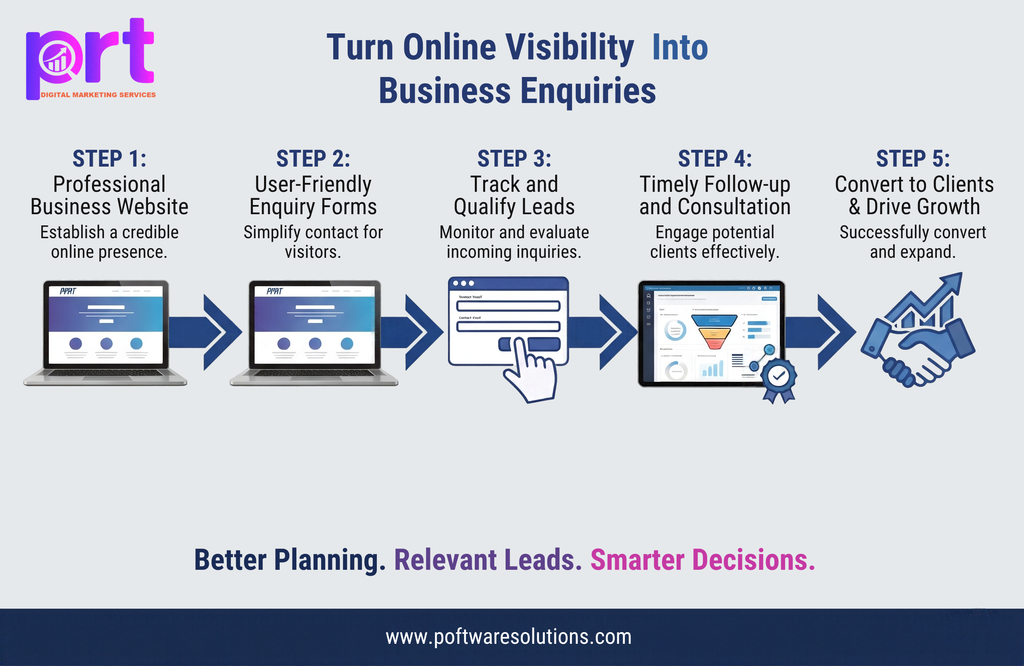
Lead generation is attracting potential customers who might be interested in your products or services and getting them to take some action relevant to your offering. This could be enquiring, asking for a quote or asking for a consultation.
Many businesses view Lead Generation as an integral part of their Marketing efforts.
The aim is to generate quality leads that are relevant to your service offering, target market, location, budget and customer needs.
Create a clear offer
People are more likely to ask questions if they know what they will get.
Rather than sending traffic to a generic page with the headline: “Contact us for more details,”, you may want to encourage them to ask for a website consultation, talk about their service requirements, or find out about a specific solution.
You should ensure that your offer aligns with your service and the target audience.
Use an appropriate landing page
Landing pages are set up for a specific campaign or offer.
They should clearly show your service, the benefits associated with it and any additional information. It should also be clear what you’d like them to do next.
If you’re sending traffic to an irrelevant page then it can cause confusion and reduce the chances of them asking a question.
Make enquiry forms simple
An enquiry form should request the information needed to respond appropriately.
Depending on your business, you may just need to ask for their name, how they can get hold of them and a short summary of what they need. If it is a more complicated project you may need to ask for more information.
Avoid requesting unnecessary details that create friction for potential customers.
Track lead sources
Businesses should try to understand where enquiries originate.
For example, leads may come from Google Search, Facebook advertisements, Instagram campaigns, organic social media, referrals, or the company website.
Campaign tracking and accurate enquiry records can help identify which channels contribute to business opportunities.
Follow up with potential customers
Once you have received a new lead from a campaign, you will need to have a process in place to follow up.
This could include thanking them, understanding their needs, answering their questions and setting up a conversation. Also noting what the next step will be.
How quickly and well you can follow up can affect the overall customer experience and how likely they will move towards a sale.
Measure lead quality, not just quantity
A campaign that generates many enquiries is not necessarily the most successful campaign.
Businesses can measure the quality of their leads and how far along the sales journey they are.
Some useful metrics could be the cost per quality lead, the appointment rate, conversion rate from lead to customer and the cost of customer acquisition.
PRT Digital Marketing Services aim to help businesses understand what leads are coming in from their online marketing. How many leads your business receives and how well they convert will depend on your campaign, budget, offer, audience and sales process.
Why Website Design, Social Media and Paid Ads Work Better Together
One of the most important aspects of digital marketing is understanding how different activities support one another.
Website design, social media maintenance, paid advertising, and lead generation should not be treated as completely separate tasks. They can be planned as parts of a connected customer journey.
Consider the following example.
A local business wants to increase enquiries for its professional services.
First, it develops a website that clearly explains its services and makes it easy for visitors to enquire.
Next, it maintains social media pages with useful content, service explanations, and relevant business updates.
It then launches a paid advertising campaign to reach people who may need those services.
Interested visitors are directed to a relevant service page or enquiry form. The business records incoming leads, responds to prospects, and reviews which campaigns generate the most relevant opportunities.
The process can be improved using the information collected at each stage.
For example:
- If advertisements receive clicks but few enquiries, the business may need to review its offer or landing page.
- If social media receives engagement but little website traffic, the content may need clearer next steps.
- If enquiries arrive but few convert into customers, the business may need to review lead quality, pricing, communication, or follow-up.
- If one campaign generates more qualified opportunities than another, the budget allocation may need to be reconsidered.
These are diagnostic possibilities, not automatic explanations. Businesses should review their actual data before making changes.
A connected strategy helps ensure that each activity contributes to a defined objective.
How to Measure Digital Marketing Performance
Digital marketing provides several ways to evaluate activity, but businesses need to select metrics that reflect their goals.
Website performance
Website visitors, sources, page views, enquiries, mobile usability and conversion rates.
Social media performance
Depending on your goals you should look at reach, engagement, shares, saves, profile views, link clicks and social media generated enquiries.
Paid advertising performance
If you have access to revenue data, you could look at impressions, click through rates, cost per click, conversion, cost per lead and return on ad spend.
Lead generation performance
Enquiries, percentage of good quality leads, cost per good quality lead, appointment bookings and conversion rates.
Business performance
Ideally you will want to link your marketing metrics to business outcomes such as new customers, revenue, customer acquisition costs and profitability.
It is important to understand the difference between conversions reported by the platform and actual verified conversions for your business. If you have accurate tracking and consistent data it will make reviewing your performance much more useful.
PRT Software Solutions will help you think about how to use technology to meet your business needs and PRT Digital Marketing Services can help you link your marketing activities to your goals.
A Practical Digital Growth Plan for Small Businesses
Businesses do not always need to launch every marketing activity at once. A phased approach can make planning more manageable.
Understand the business
Know your target audience, core offer, USP, location and what your primary goal is.
Audit your current marketing activity and look at where there are gaps.
Establish your online foundation
Improve or create a website which is mobile responsive and explains well what services you offer. Ensure they can easily get in touch.
Ensure that your business is consistent across online platforms.
Plan your content
Select the correct social media platforms and create a realistic content plan.
Create content to answer questions, explain services, show your expertise and to encourage engagement.
Launch targeted campaigns
Once you have an offer and landing page, consider using paid advertising.
Start with a clear audience and affordable budget. Set up conversion tracking so you can measure your campaigns.
Organize lead handling
Create a process for handling inquiries, tracking sources of leads, qualifying leads and following them up.
Ensure that the team handling your leads understand your offering so they can provide accurate responses.
Review and improve
Review performance against your initial goals.
Identify what is working well, areas that need improvement and any gaps in information. Use this to inform your next steps.
This will help businesses to take their marketing efforts from being fragmented to having a structured process for growing their business.
How PRT Software Solutions Supports Business Growth
PRT Software Solutions provides technology services that help businesses build and improve their digital capabilities. Its published services include website development, UI/UX design, custom software development, app development, cloud services, and software consulting.
Website: https://prtsoftwaresolutions.com/
Alongside its technology services, PRT Digital Marketing Services focuses on helping businesses strengthen their online presence and pursue growth opportunities through business ideas, website designing, social media maintenance, paid advertising, and lead generation.
This combination is relevant for businesses that need both a digital foundation and a plan for attracting potential customers.
Website designing for businesses
PRT can help you create a professional website to showcase your services.
With a well planned website you can provide a place for users to visit from social media, search engines and advertising.
Social media maintenance
If you are finding it difficult to keep on top of your content then having a plan will help.
Having a plan will ensure your content is regularly updated and shows your value consistently.
Paid advertising and lead generation
If you want to be more targeted with your visibility then advertising could be an option.
PRT Digital Marketing Services can help you create a plan for your advertising to ensure you are targeting the right audience, offering the correct products/offers, providing ways for people to enquire and ensuring you hit your performance targets.
Business ideas and growth guidance
We can help you identify where opportunities are, what your position should be and which digital activities will give you the best results.
Having a realistic growth plan will ensure you’re doing the right things with your website, social media and advertising.
Technology and marketing under one brand
You may need a website now, but also some form of application or bespoke software solution in the future. Plus some marketing to support your growth.
As PRT Software Solutions, we offer a range of technology services alongside our digital marketing offering. Depending on your requirements, we can provide the right mix of services to support your client’s needs and project.
This will allow businesses to make informed choices regarding their digital presence and provide them with a more cohesive strategy.
Why Businesses Should Choose a Strategy Before Choosing a Service
When looking at your options it can be tempting to jump straight into something like Facebook ads or website design. However, the right place to start will depend on what issues you are currently facing.
If you don’t have a professional website then this should be your starting point.
If you already have a good website, but aren’t getting much exposure then improving your content, SEO or advertising could be the way forward.
If you’re getting a good amount of enquiries but not many sales then it might be worth looking into your lead quality, sales process, pricing or offer.
If your social media activity is inconsistent then having a sustainable plan for your content would be a good option.
Ultimately you want to choose an option that will solve the biggest issue you have, rather than just the most appealing.
Before investing, businesses should ask:
- What business outcome do we want to improve?
- Who are our target customers?
- What is preventing us from reaching them?
- Which channel is most suitable for our audience?
- How will we measure success?
- What budget and resources can we commit?
- Who will respond to enquiries and follow up?
These questions create a stronger foundation for selecting services and evaluating results.
Common Digital Marketing Mistakes to Avoid
Expecting instant results from every channel
Some advertising campaigns can generate enquiries quickly, while organic visibility and audience trust may take longer to develop. Timeframes vary according to the market, competition, strategy, and implementation.
Focusing only on low-cost leads
If you are getting leads at a low cost, but they aren’t relevant or are low converting leads then it isn’t a great indicator of success.
Copying competitors without understanding customers
Competitor research can be helpful but you also want to make sure your strategies are based around your offering, audience, budget and goals.
Publishing content without a purpose
Every content item should have a reason to exist. It might educate, build trust, explain a service, encourage engagement, or generate enquiries.
Running advertisements without tracking
Without proper tracking in place it can be hard for you to see if your campaigns are really giving you any useful results. Plan your tracking ahead of time.
Ignoring the website experience
Whilst advertising can bring people to your site, if your website isn’t clear or your offer is confusing they may not know what to do next.
Failing to follow up on enquiries
Marketing campaigns are just one step in the customer journey. Be sure to define roles and processes for managing the leads coming into the business.
By avoiding these mistakes you can be more intentional with your time and marketing budget.
The Future of Business Growth Is Connected, Customer-Focused Marketing
With more digital opportunities available, you can get your business in front of your audience more and learn more about your customers.
However, having more tools available does not guarantee that you’re using them correctly. You still need to ensure you have a good strategy, quality content and provide a reliable service with great communications.
You should ensure that you’re providing a consistent experience for your customers.
Use your website to highlight what you offer. Use your social media to provide your audience with relevant information. Provide them with the right offers through your adverts. Ensure your enquiry process is easy.
This can be done using better tools for your website, software, analytics and streamlining processes. Marketing can help you attract the right audiences.
The best way to do this is to ensure you’re doing the right activities and being very careful with how you’re doing them. Ensure you’re measuring how well they are working and improving them as you learn more about your customers.
This means you have a more realistic base for your long term digital growth as your business grows.
Frequently Asked Questions
What are digital marketing services for business growth?
Digital marketing services for business growth help businesses improve their online presence, reach relevant audiences, communicate their value, and generate potential customer enquiries. Depending on the business, these services may include website designing, social media maintenance, paid advertising, lead generation, and growth strategy.
Why does a business need a professional website?
A professional website gives potential customers a central place to learn about a business, explore its services, review relevant information, and make contact. A well-structured website can also support social media campaigns, paid advertising, and search visibility.
Can social media marketing help small businesses?
Social media can help small businesses communicate with their audience, share useful content, present their services, and encourage enquiries. Results depend on the platform, audience relevance, content quality, consistency, and the business’s overall marketing strategy.
What is the difference between organic social media and paid advertising?
Organic social media involves publishing content and interacting with audiences without paying for each distribution placement. Paid advertising involves paying a platform to distribute advertisements according to campaign settings. Businesses may use both approaches for different objectives.
How does paid advertising generate leads?
Paid advertising can direct relevant audiences to a website, landing page, lead form, phone call, or messaging channel. When interested prospects submit their details or make contact, the business can qualify the enquiry and follow up. Results depend on campaign quality, audience, offer, budget, and follow-up.
How much should a small business spend on digital marketing?
There is no single budget suitable for every business. Spending depends on industry competition, objectives, location, target audience, channels, and available resources. Businesses should distinguish service fees from advertising spend and establish a budget they can sustain while measuring results.
Does digital marketing guarantee sales or leads?
No. Digital marketing can help businesses reach potential customers and create opportunities, but it cannot guarantee a specific number of leads or sales. Results depend on multiple factors, including the offer, audience, competition, website experience, campaign implementation, and sales process.
Can I combine website development and digital marketing?
Yes. Website development and digital marketing can complement each other. A website can act as the destination for visitors from search engines, social media, and paid advertisements. The best approach depends on the business’s existing digital presence and objectives.
Conclusion: Build Your Business With a Clear Digital Growth Strategy
Business growth requires a combination of understanding customers, communicating value, maintaining a credible online presence, and creating opportunities for people to enquire about your products or services.
A professional website, consistent social media maintenance, carefully planned paid advertising, and a structured lead-generation process can work together to support these objectives.
The key is to choose services based on your business needs rather than investing in disconnected activities without a clear plan.
PRT Software Solutions brings technology services together with its digital marketing vertical, PRT Digital Marketing Services, to support businesses looking to strengthen their digital presence. From website designing and social media maintenance to paid advertising, lead generation, and growth-focused planning, the aim is to help businesses identify appropriate opportunities and build a more coordinated digital strategy.
If your business is ready to improve its online presence, explore the services available through PRT Software Solutions and discuss which approach best fits your goals.
Ready to take the next step toward business growth?
Visit https://prtsoftwaresolutions.com/ to explore PRT Software Solutions and get in touch about your website, technology, or digital marketing requirements.
PRT Software Solutions — Technology and Digital Solutions for Business Growth.